
The complete guide
Matching bag weight to the player
Why weight is the only spec that matters
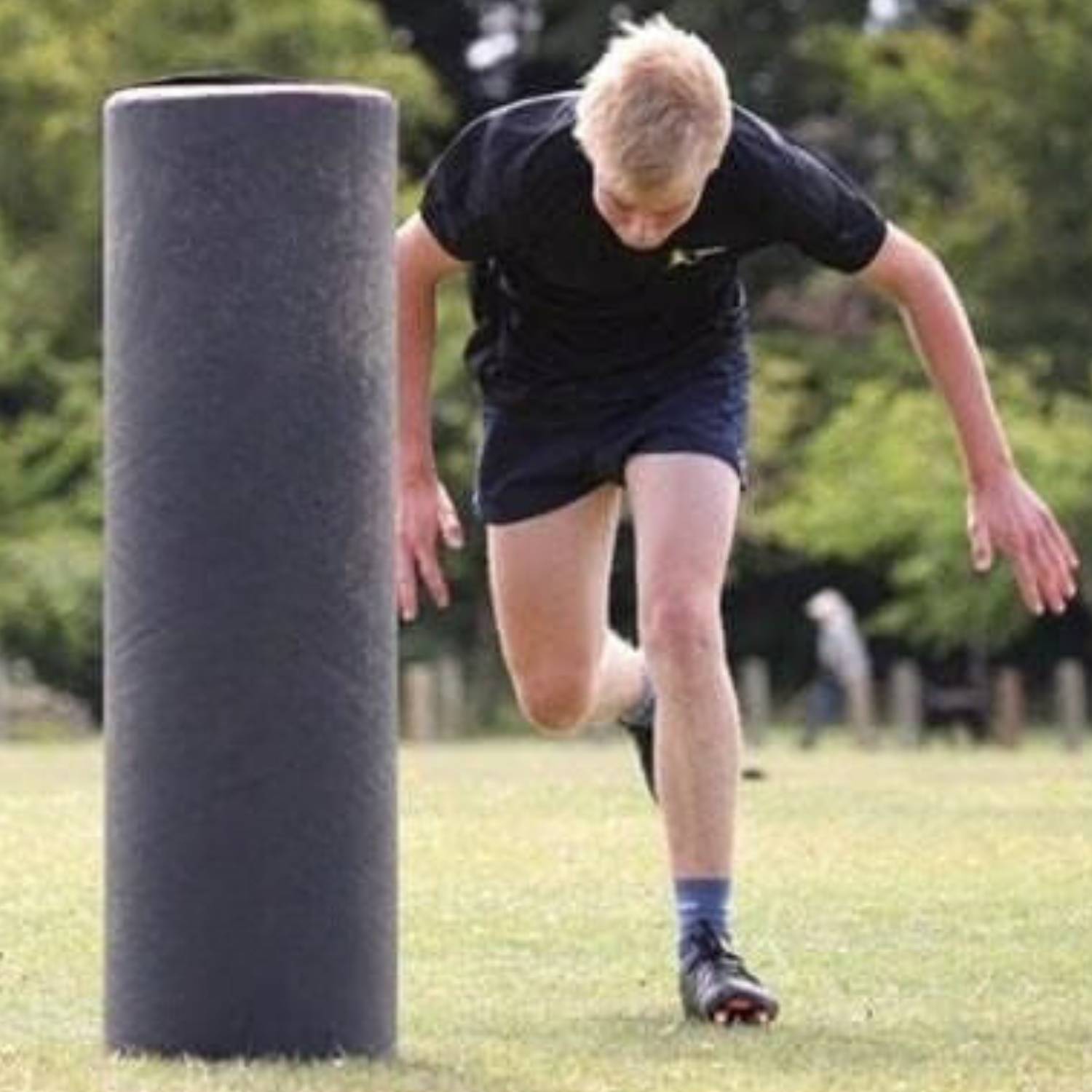
A tackle bag is a shell around a weight. The shell decides how long it lasts. The weight decides what it teaches.
Too heavy and a player learns to arrive tentatively, because arriving properly hurts and achieves nothing. That is exactly the habit that causes injuries in real contact.
Too light and the bag moves before the player has to do anything correct, so poor technique gets rewarded.
The three weights, in practice
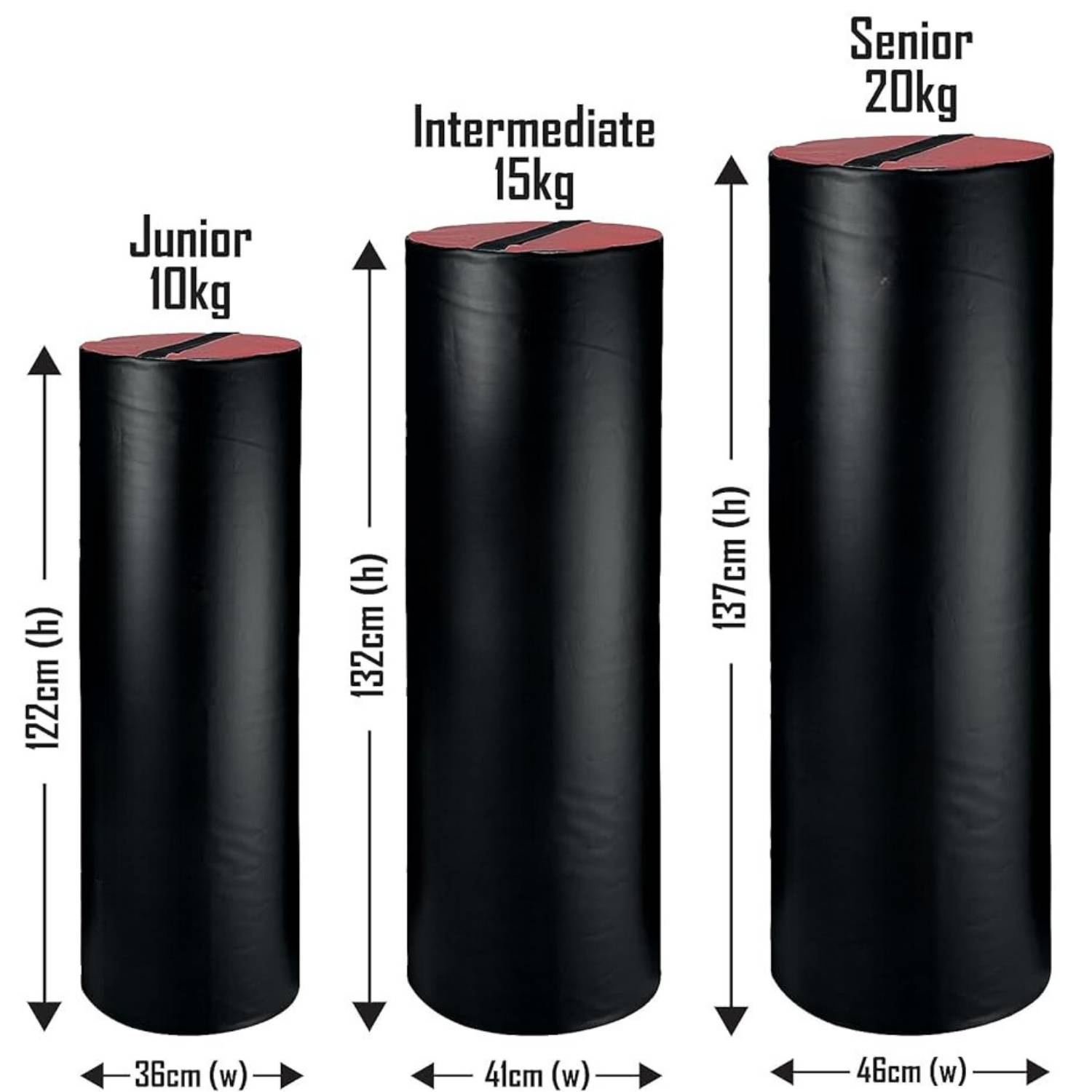
Junior 10kg, from around age 7. Learning shoulder contact, head position and driving with the legs. The bag has to move when they do it right, or nothing is being taught.
Intermediate 15kg, from around 13. Bigger bodies, real drive, and the beginnings of contact conditioning.
Senior 20kg, from around 15. Full contact work, repeated hits and conditioning where the point is that the bag pushes back.
Ages are a guide. A big thirteen year old and a small fifteen year old should probably swap.
Holding the bag properly
The holder is half the drill and gets almost no attention.
Feet staggered, not square. A holder square on gets driven over.
Brace, then absorb. Rigid holding turns the bag into a wall and jars both people.
Hold it low enough. Most bags are held too high, which teaches players to hit up into contact rather than through it.
Rotate holders. It is tiring, and a tired holder is an unpredictable one.
Drills that work with one bag
Shoulder and roll. Contact, drop the shoulder, roll off. The foundation.
Hit and drive, three steps. Contact then keep the feet moving. This is the one that transfers.
Tackle and regain feet. The most match relevant thing anyone can practise.
Repeat contact. Four bags in a row for conditioning, once technique is solid.
Making it last
Hose it, stand it, store it indoors. Three habits, one bag that lasts years.
Watch the handle stitching. That is where a well used bag goes first, and it is fixable if you catch it early.