

The complete guide
Buying your first adjustable dumbbells
Buy for the exercises you will actually do
The set weight question answers itself once you list the movements.
Curls, lateral raises, shoulder work, light pressing. 15kg or 20kg total is plenty and will be for a long time.
Rows, heavier presses, goblet squats. 25kg or 30kg, and you will still find legs outgrow it.
Almost nobody regrets buying the smaller set for arm and shoulder work. Plenty of people buy 30kg, use 12kg, and store the rest.
Why mixed plate sizes matter more than the total
A set that is all large plates jumps in big steps. If the smallest increase available is five kilos a side, you go from a weight you can lift for twelve reps to one you cannot lift for six.
Small plates make small jumps possible, and small jumps are the entire mechanism of getting stronger. Check the plate mix, not just the headline number.
Spinlock versus the expensive kind
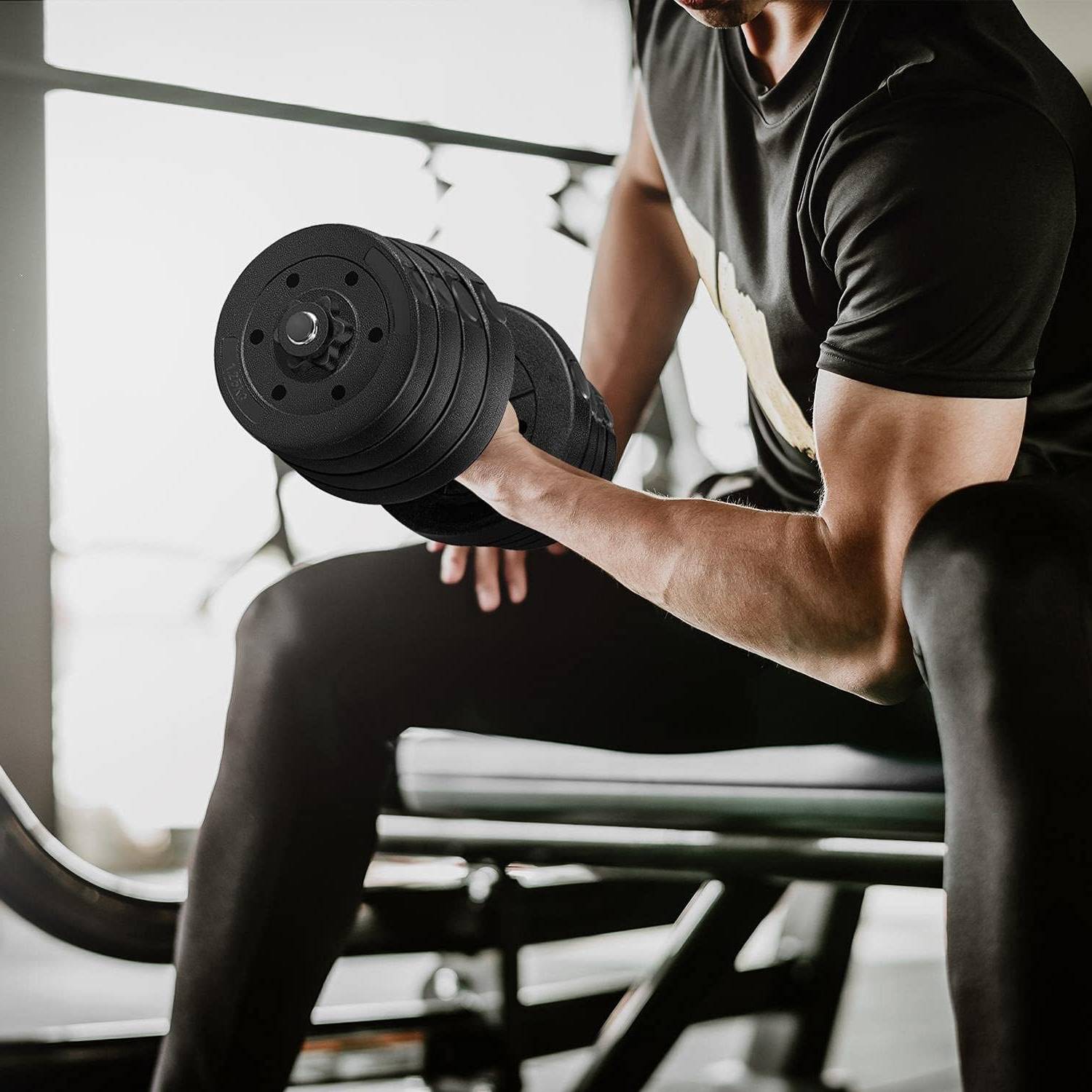
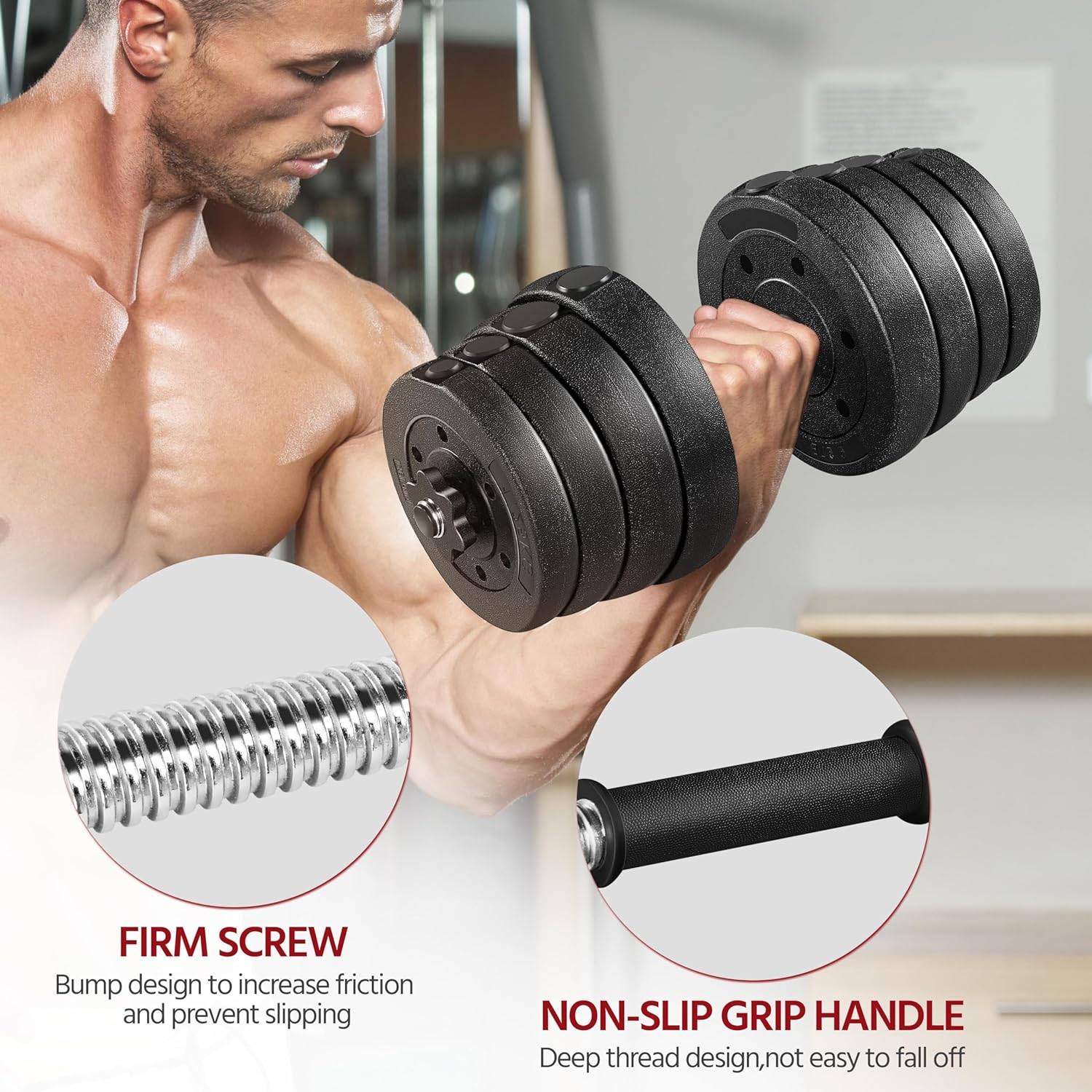
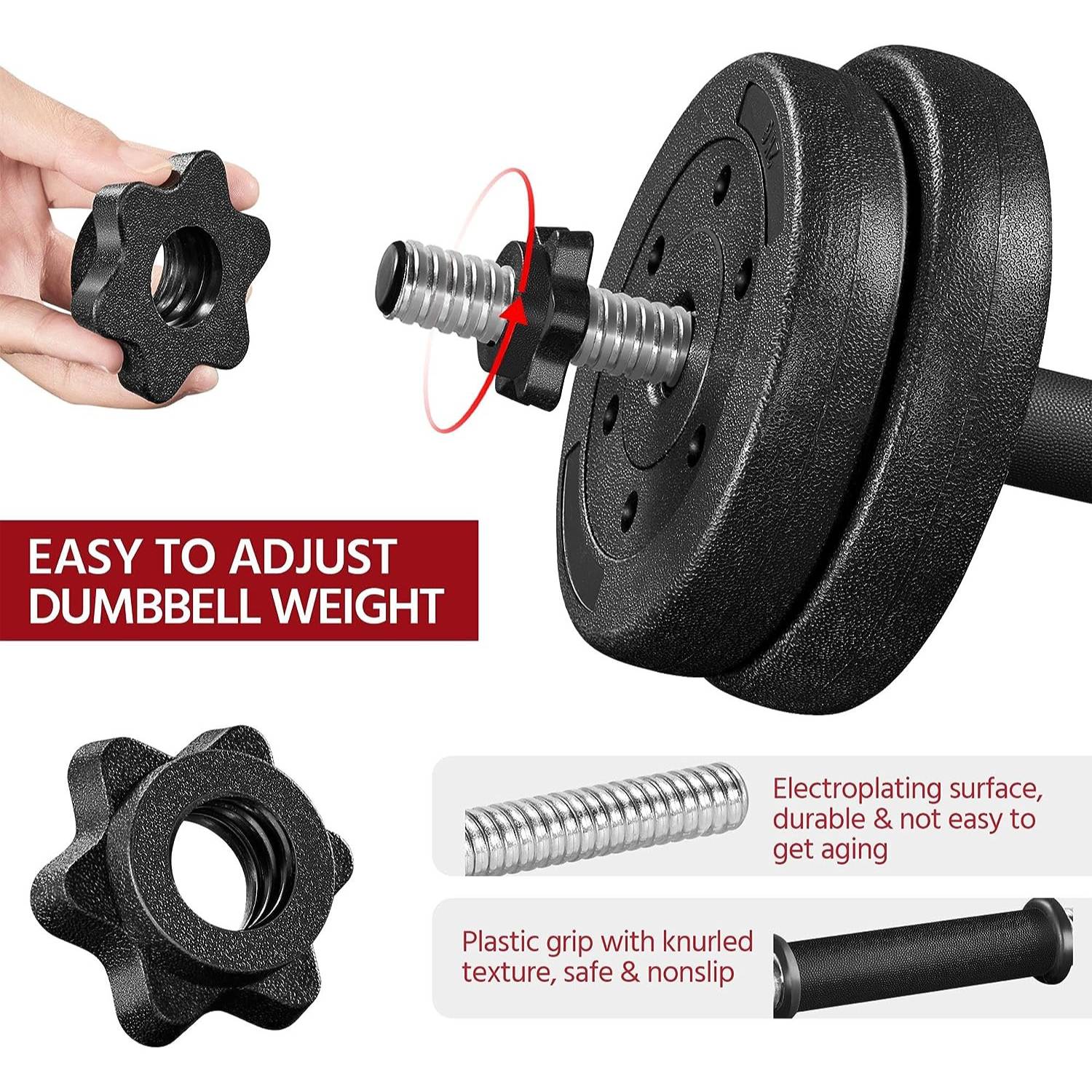
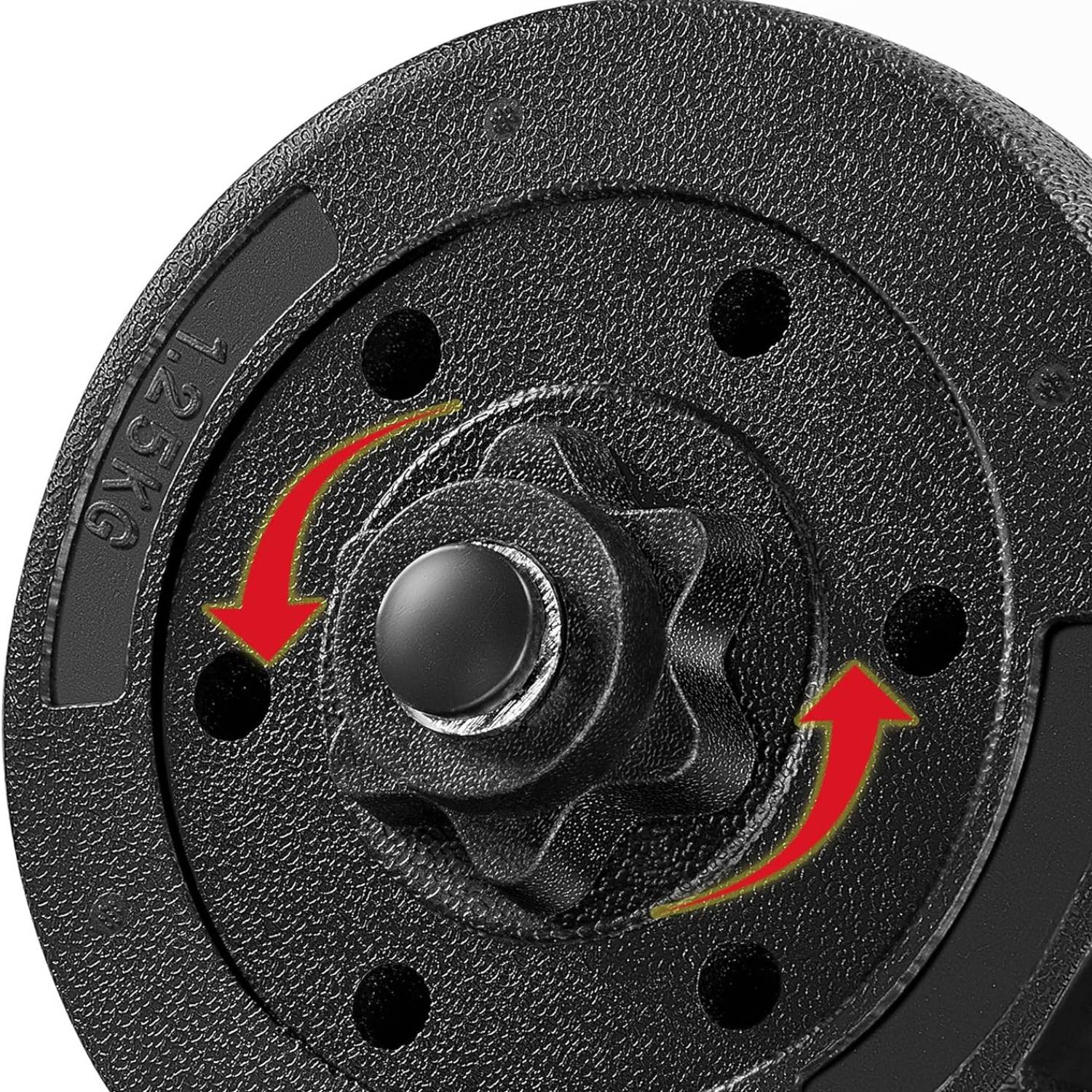
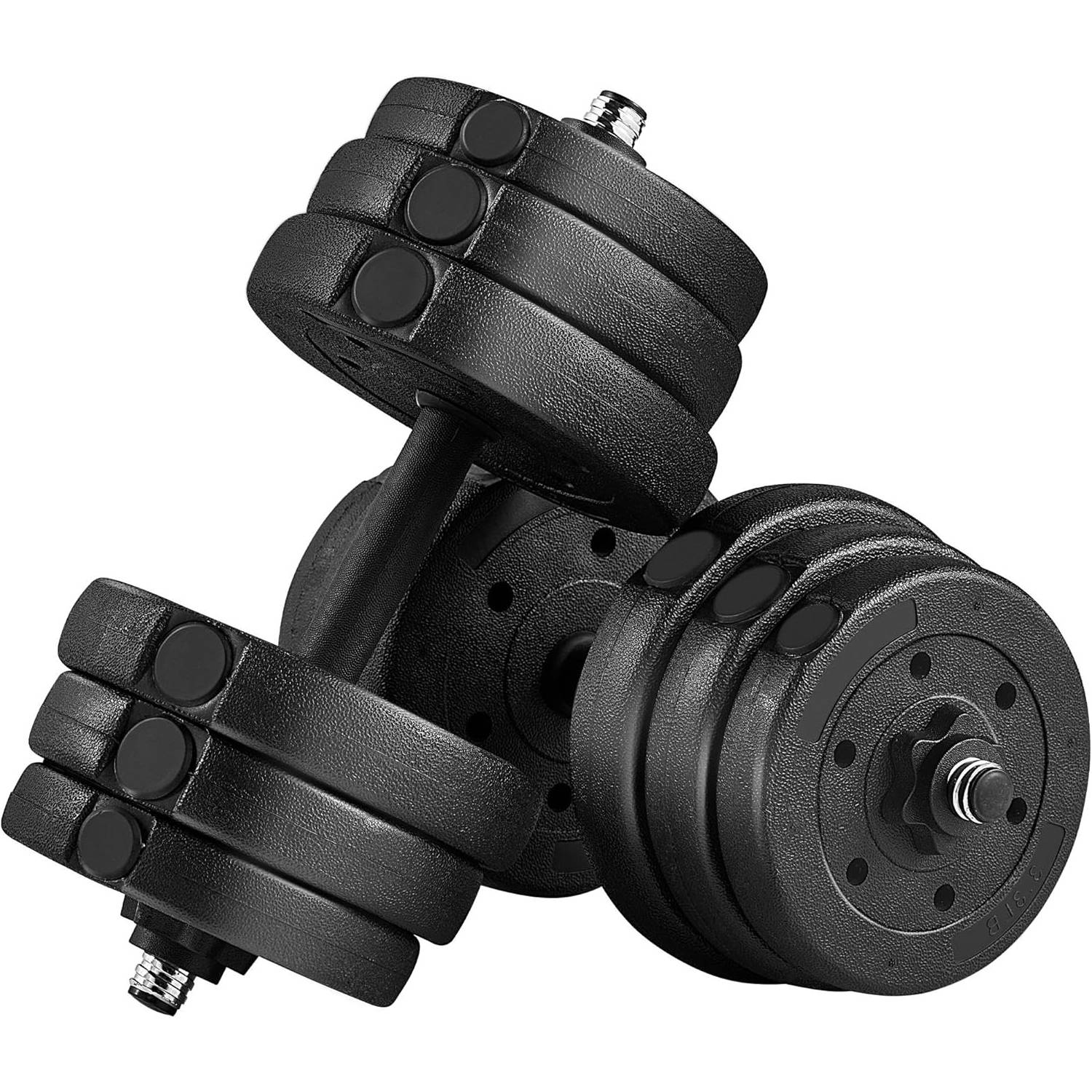
Spinlock, which is what this is: threaded bar, screw collar, plates. Cheap, simple, nothing proprietary, nothing to break. Slower to change, and the bar gets longer as you load it.
Selectorised, the dial or pin type: instant changes, fixed length, several times the price, and a mechanism that can fail out of warranty.
For most home training the slow change is not the constraint people expect it to be. You change weight between exercises, not between reps.
The safety habits, which are short
Both collars, every set. Not most sets.
Set them down, do not drop them. Concrete plates crack and floors dent.
Watch the bar length as you load. A heavily loaded spinlock bar is long, and it will catch a bench, a door frame or your own thigh.
Store plates off the bars. A loaded bar left leaning is the one that rolls.
Getting the most from a small set
Slow the tempo down, do more reps, add a pause at the hardest point of the movement, and use single arm variations to double the effective load.
A 20kg set used well beats a 30kg set used carelessly, and it takes up less of your hallway.