

The complete guide
Setting up a golf practice space at home
What a mat can and cannot teach you
A mat is excellent for one thing: repetitions. Grooving a swing takes hundreds of balls, and hundreds of balls at a range costs more than the mat did.
What it cannot do is give you lies. Every shot from a mat is perfect and flat. That is why golfers who only practise on mats find the course harder than the range, and it is a reason to keep some practice on grass.
The thing to check before anything else
Space, and specifically height.
Full swing indoors needs more ceiling than most garages have. Take a slow swing with a driver before you buy a net, not after.
Full swing outdoors needs somewhere the ball can go safely, which in most gardens means a net.
Short game needs almost nothing, which is why a mat and a chipping net is the setup most people actually use.
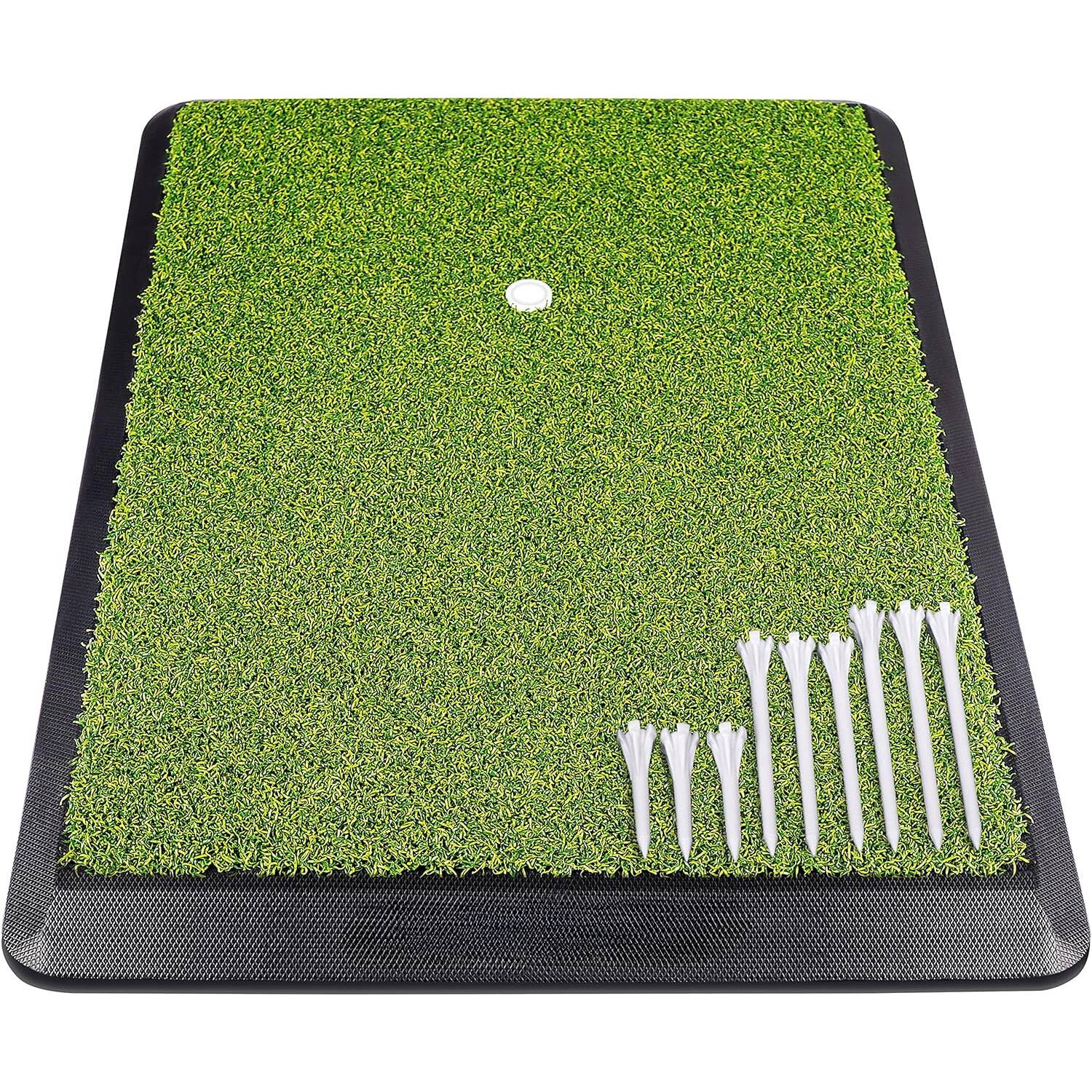
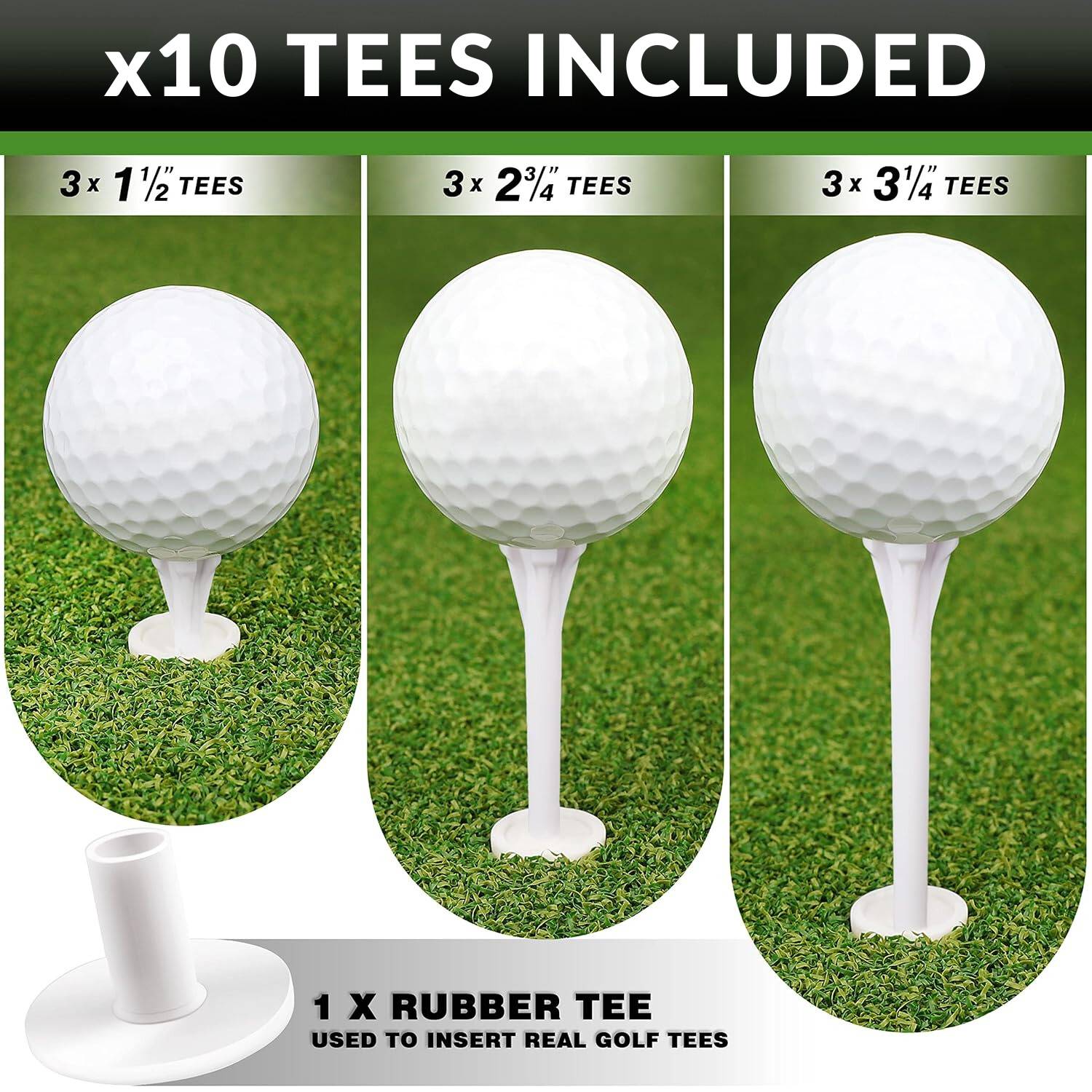
Tee heights, since they came in the box
The three plastic heights are not decoration.
38mm for irons and low profile woods. Barely proud of the turf, which is what an iron wants.
70mm for mid range woods, where you want the ball sitting up but still swept.
83mm for the driver, where the aim is to catch the ball on the way up.
The rubber tee is the durable one for repeated driving work, and it is the one that survives being hit.
Wear, and how to spread it
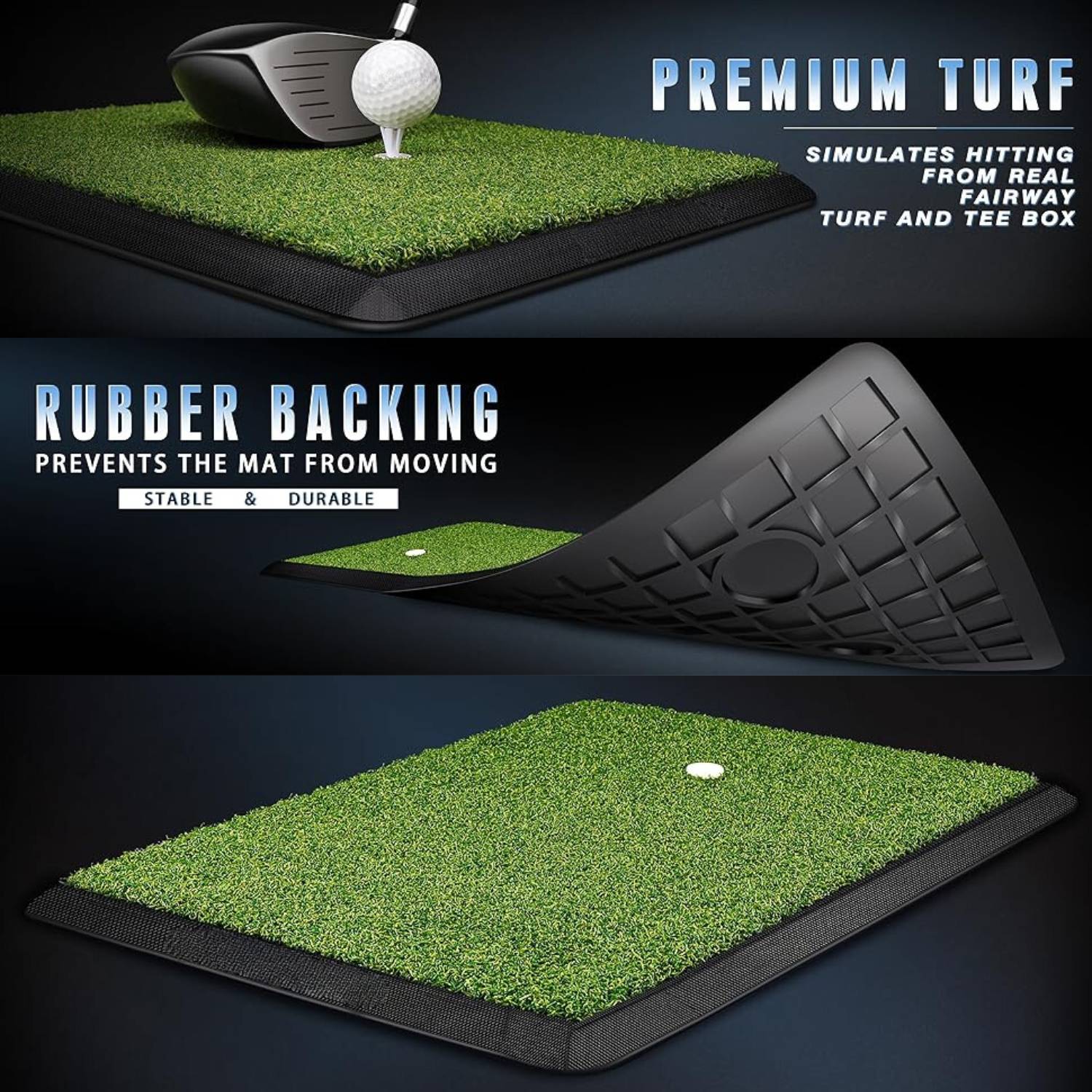
Every mat wears where you tee up, because that is where every ball is.
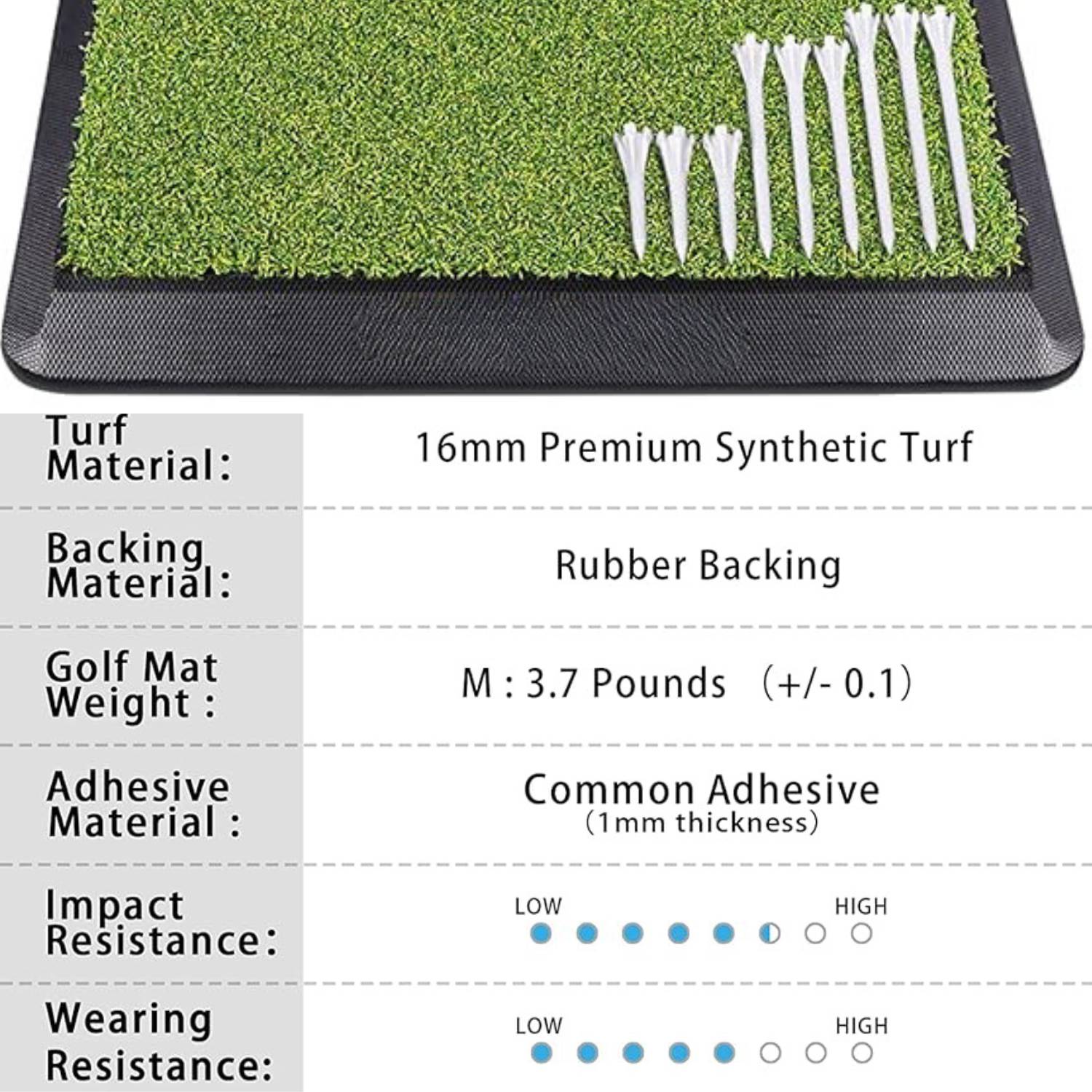
Move the tee position around by a few centimetres regularly. Rotate the mat end for end every few weeks. Between them, those two habits double the useful life of the surface.
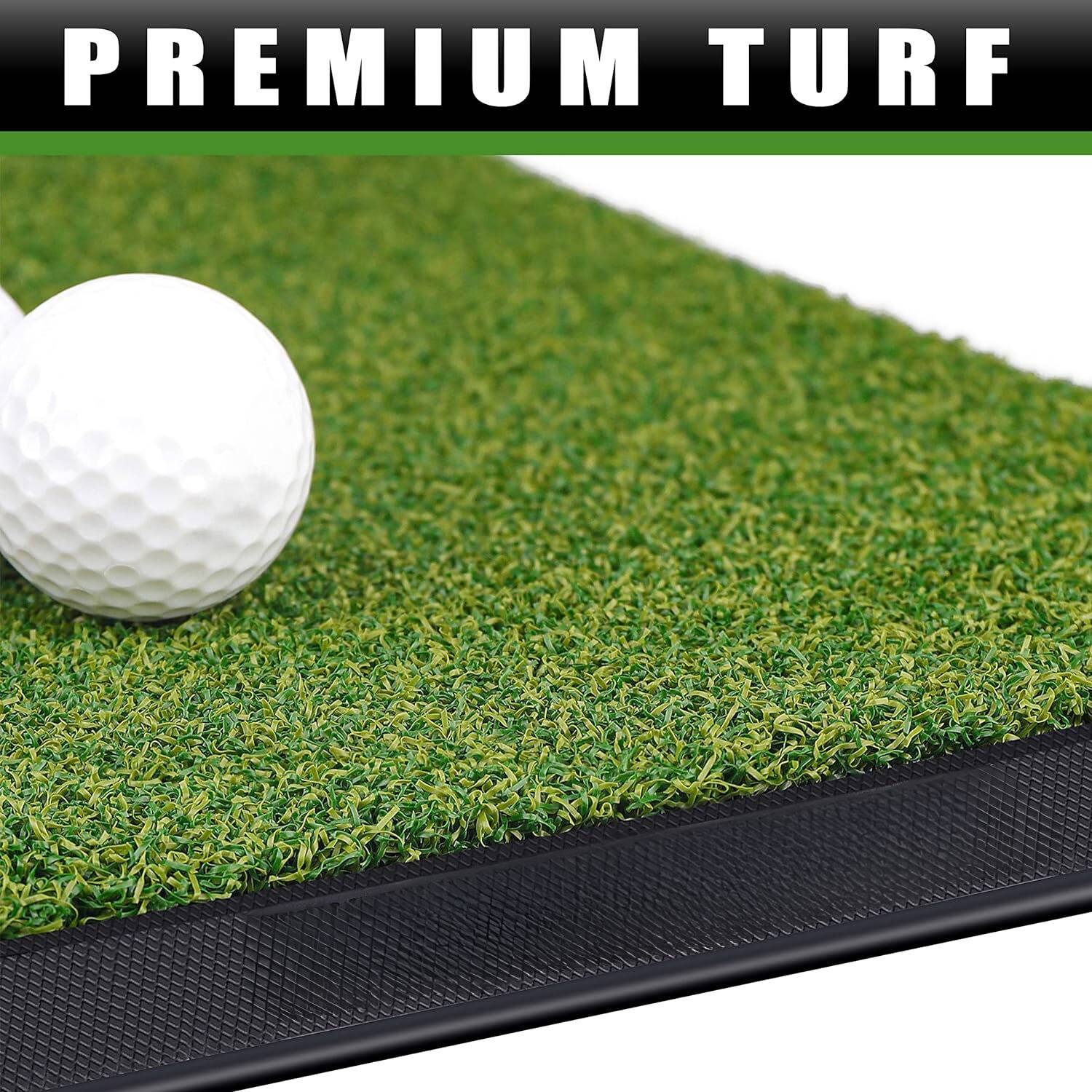
Brush the pile up when it starts looking flattened. A mat with one polished patch plays differently from the rest of itself, and it will quietly change what your swing does.
Storing it
Flat is best. Rolled with the turf outwards is fine.
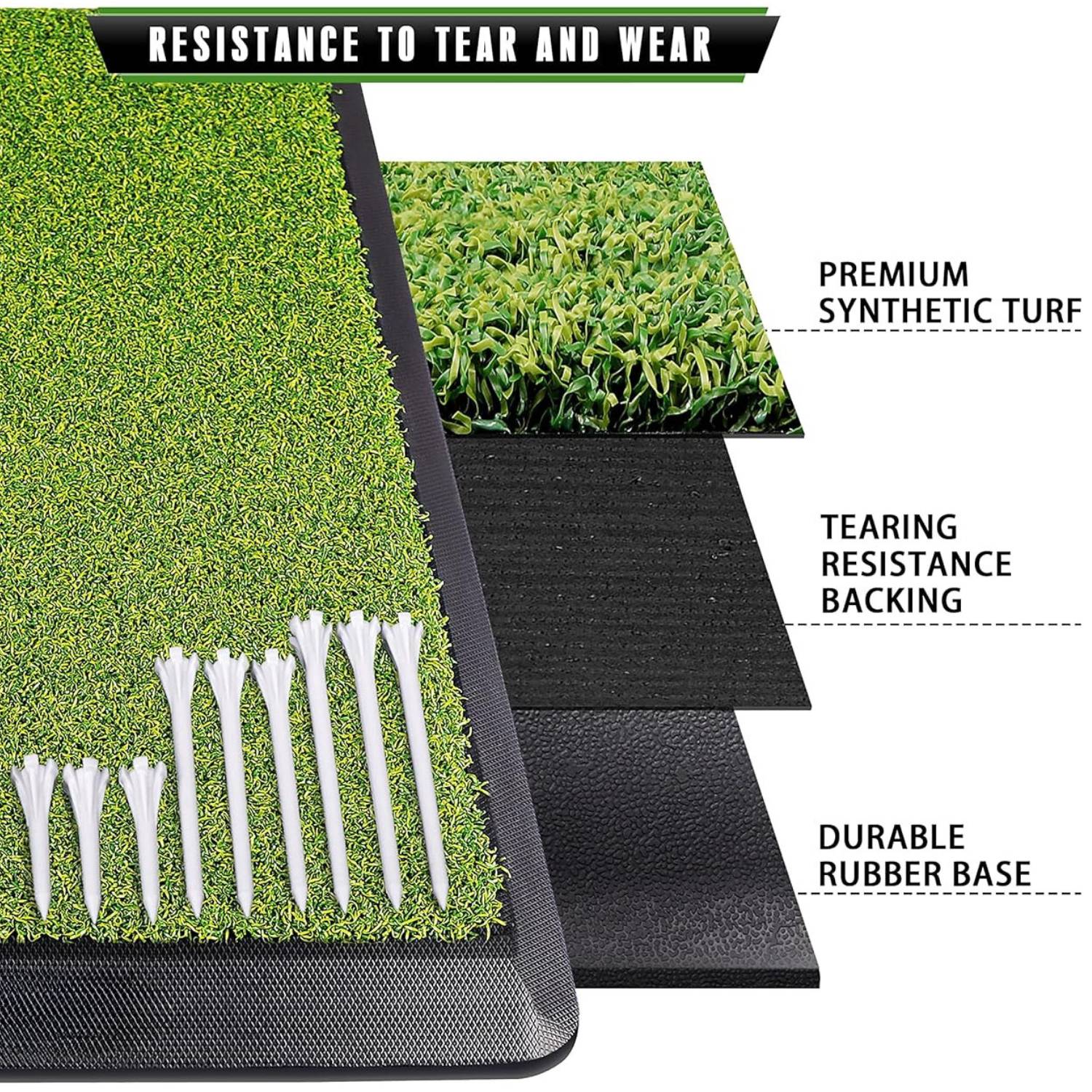
Never folded. The rubber backing takes a crease and keeps it, and a mat with a ridge across it is a mat you stop trusting.