

The complete guide
Twenty minutes in the garden that actually improves a player
Why footwork, and why at home
Club training is mostly about the team. Shape, patterns, set pieces, a match at the end.
The individual things, foot speed, first touch, turning on the correct foot, are best drilled alone and often. Twenty minutes, three times a week, in a garden, will do more for a young player than an extra session a month.
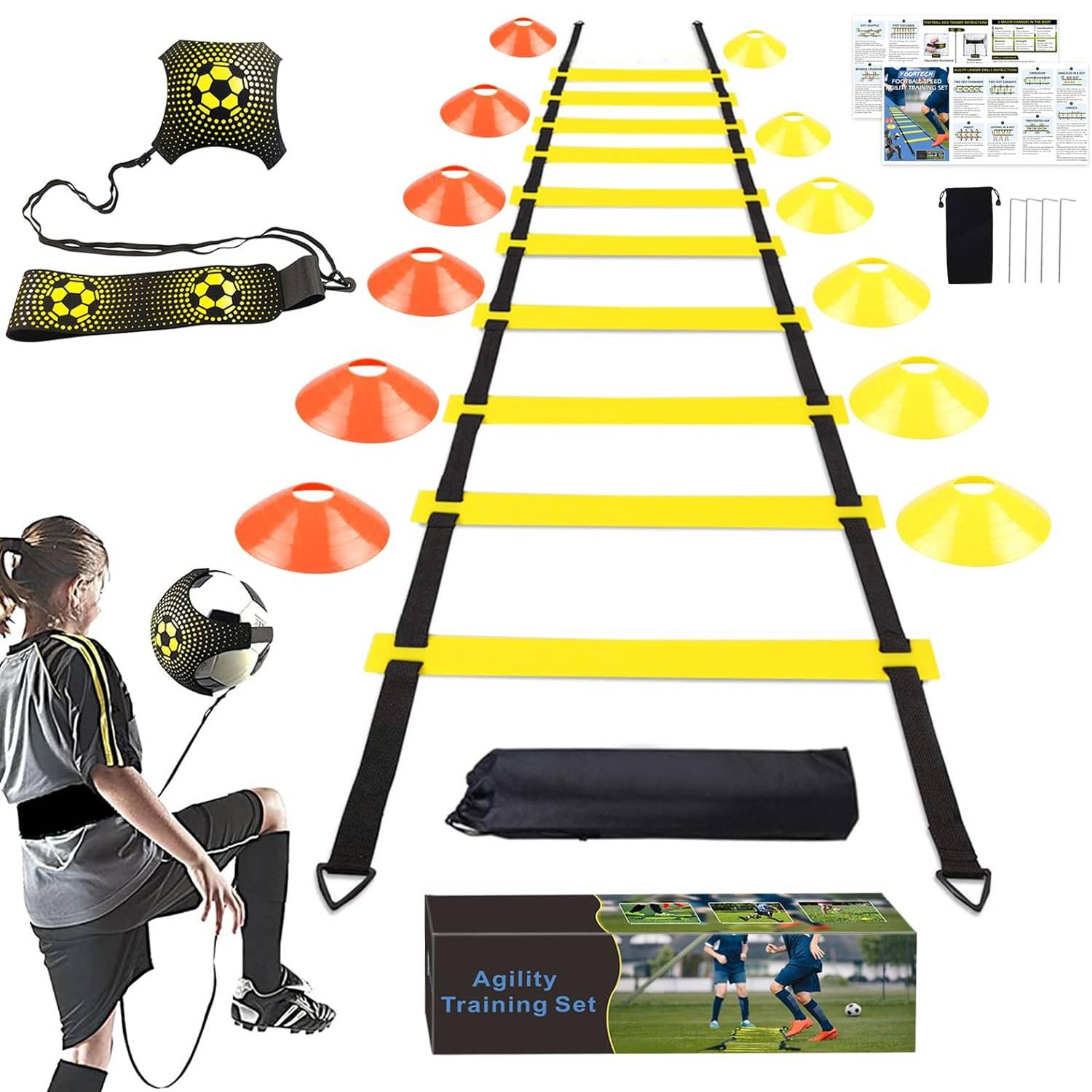
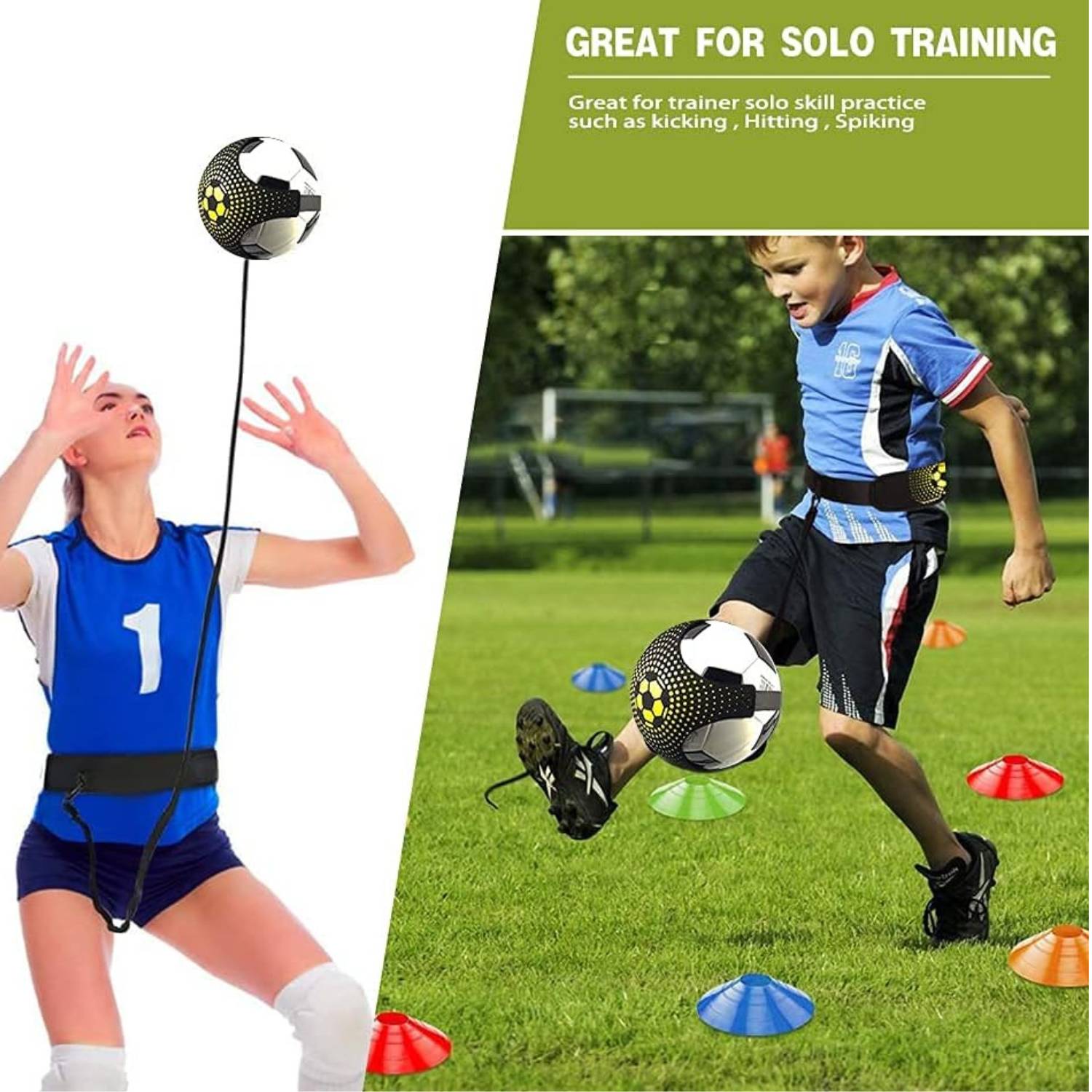
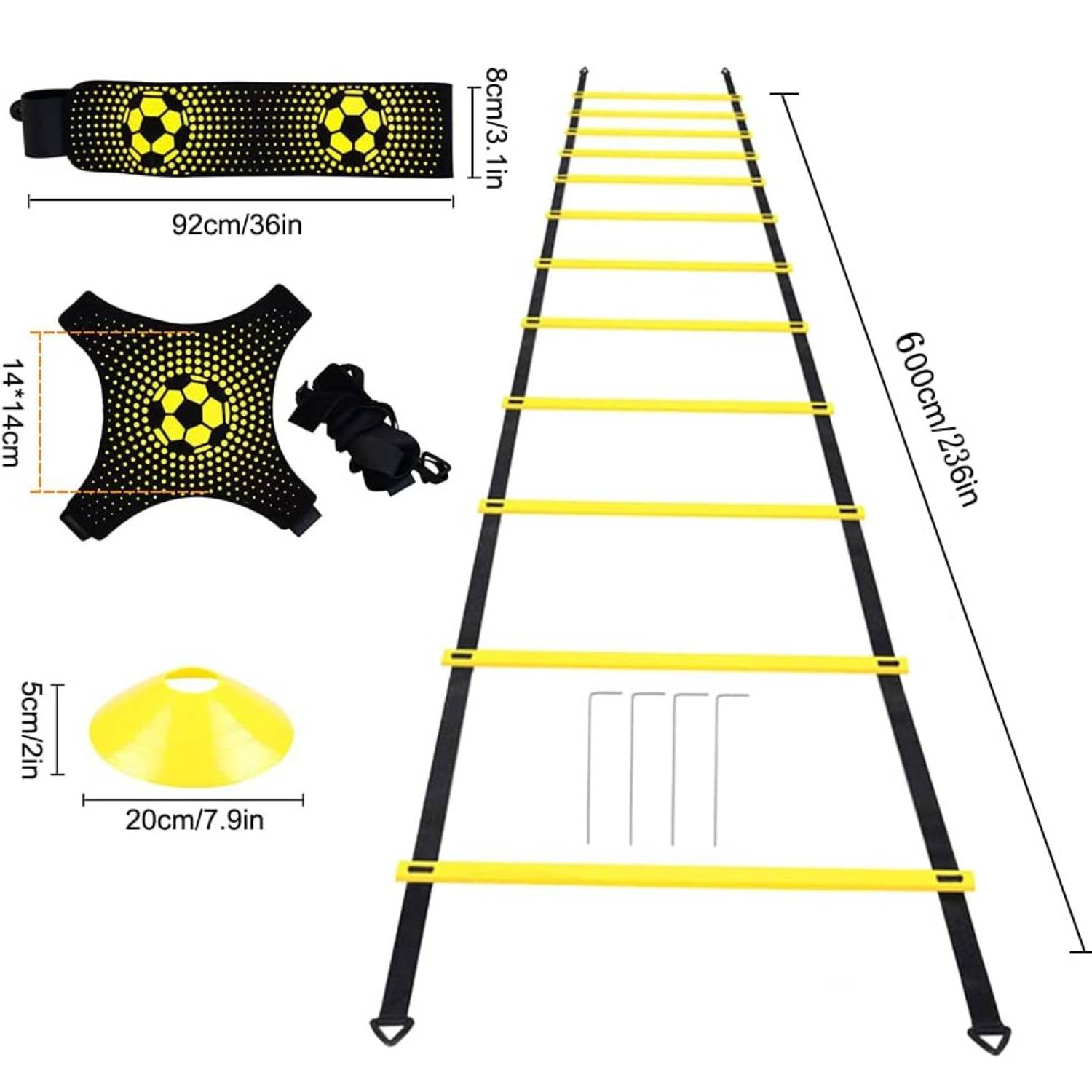
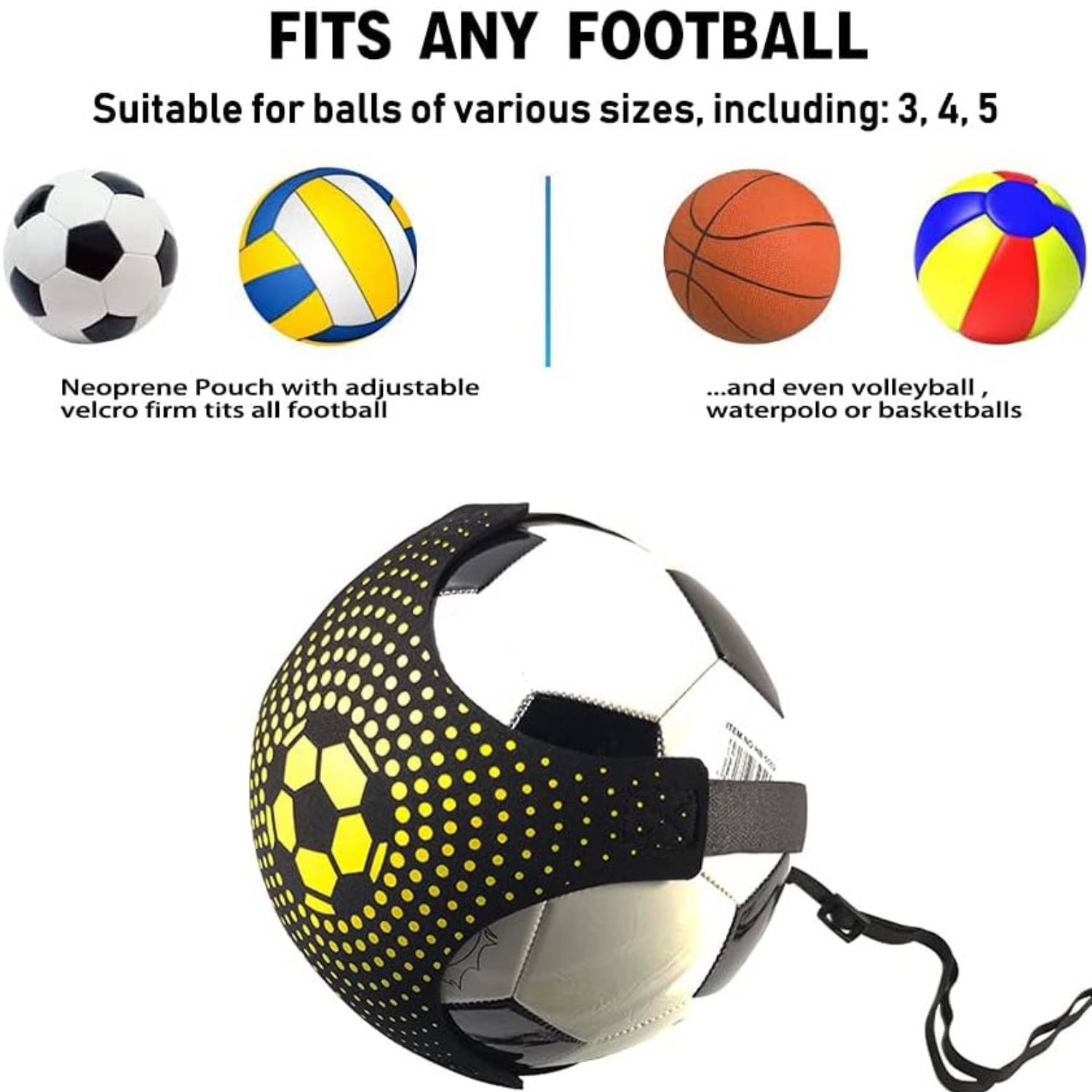
This kit exists because those twenty minutes need a ladder, some cones and something that returns the ball.
A session that works
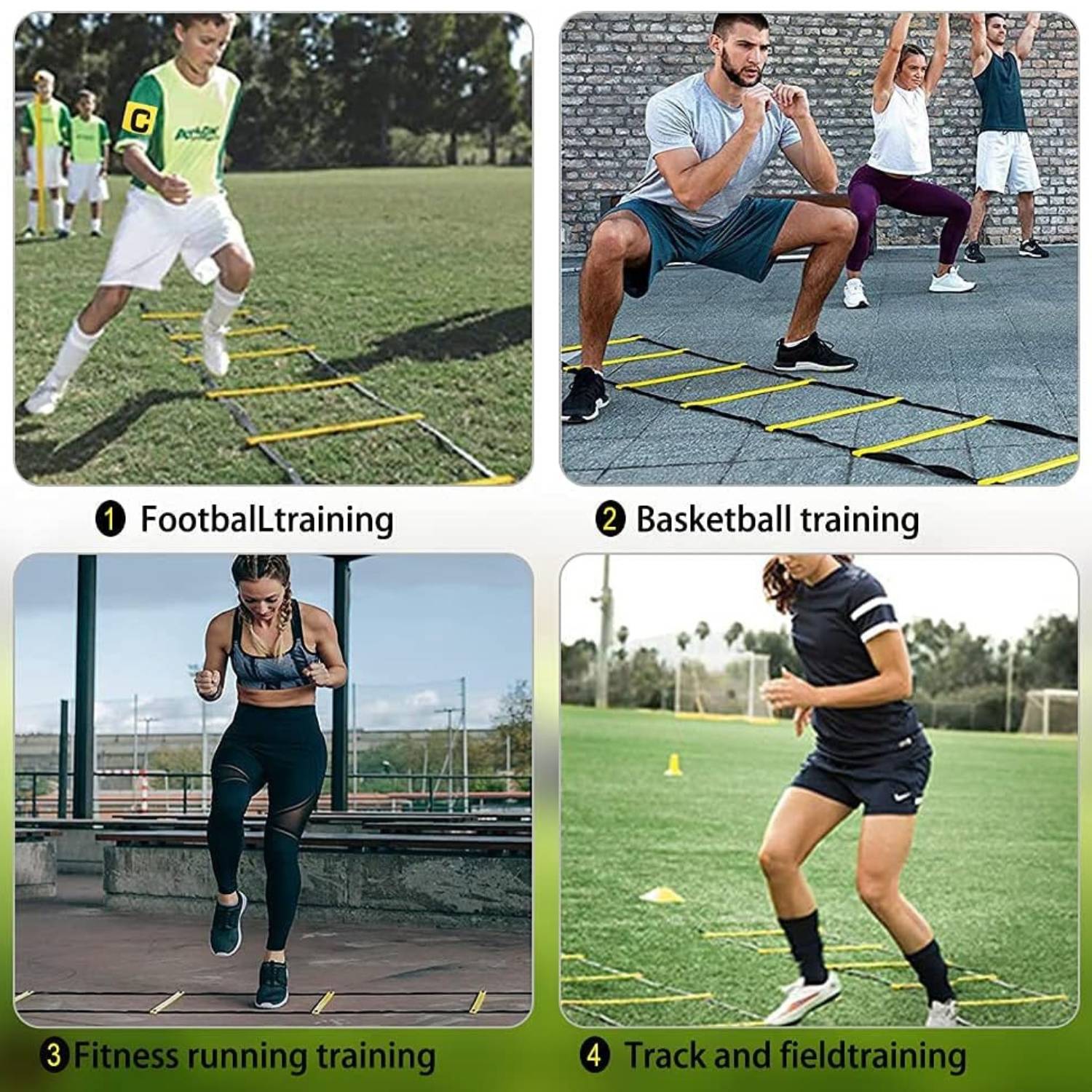
Five minutes of ladder. Two feet in, one foot in, in and out laterally. Slow and correct beats fast and messy, always.
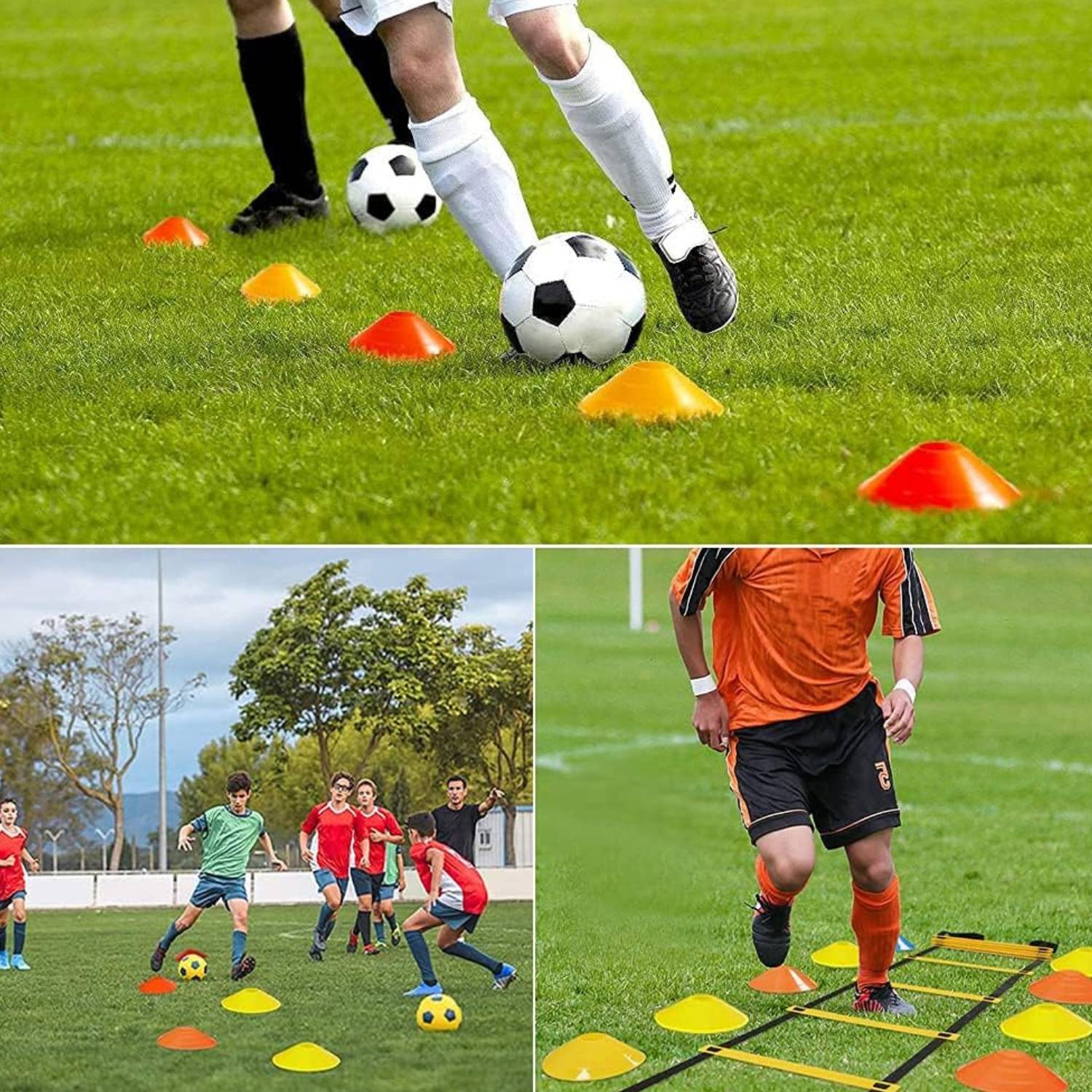
Five minutes of cone work. A simple slalom with the ball, both feet, then the same again turning at the end.
Five minutes with the kick trainer. Touch and return, alternating feet.
Five minutes of something they choose. This is the part that makes them come back tomorrow.
Using the two cone colours
This is the most underused thing in the box.
Set two colours as two gates. Call a colour as the player starts moving and they have to react rather than execute a pattern they already knew. That single change makes a drill look like football instead of like a dance.
For younger children, calling colours is also the difference between a drill and a game.
Ladder technique that matters
Eyes up. A player looking at the ladder is learning nothing that transfers.
Land on the balls of the feet. Quiet feet, quick feet.
Arms working. Footwork is a whole body movement and stiff arms slow everything down.
Stop when it gets sloppy. Fatigued footwork drills teach fatigued footwork.
The stakes, seriously
Four steel ground stakes go into a lawn and are invisible from three metres away.
Count them out, count them back in, every session. A stake left in grass and found later by a lawnmower is the one genuine hazard in this box.