

The complete guide
Why a floor beam is the one to buy first
The width is the skill, the height is the fear
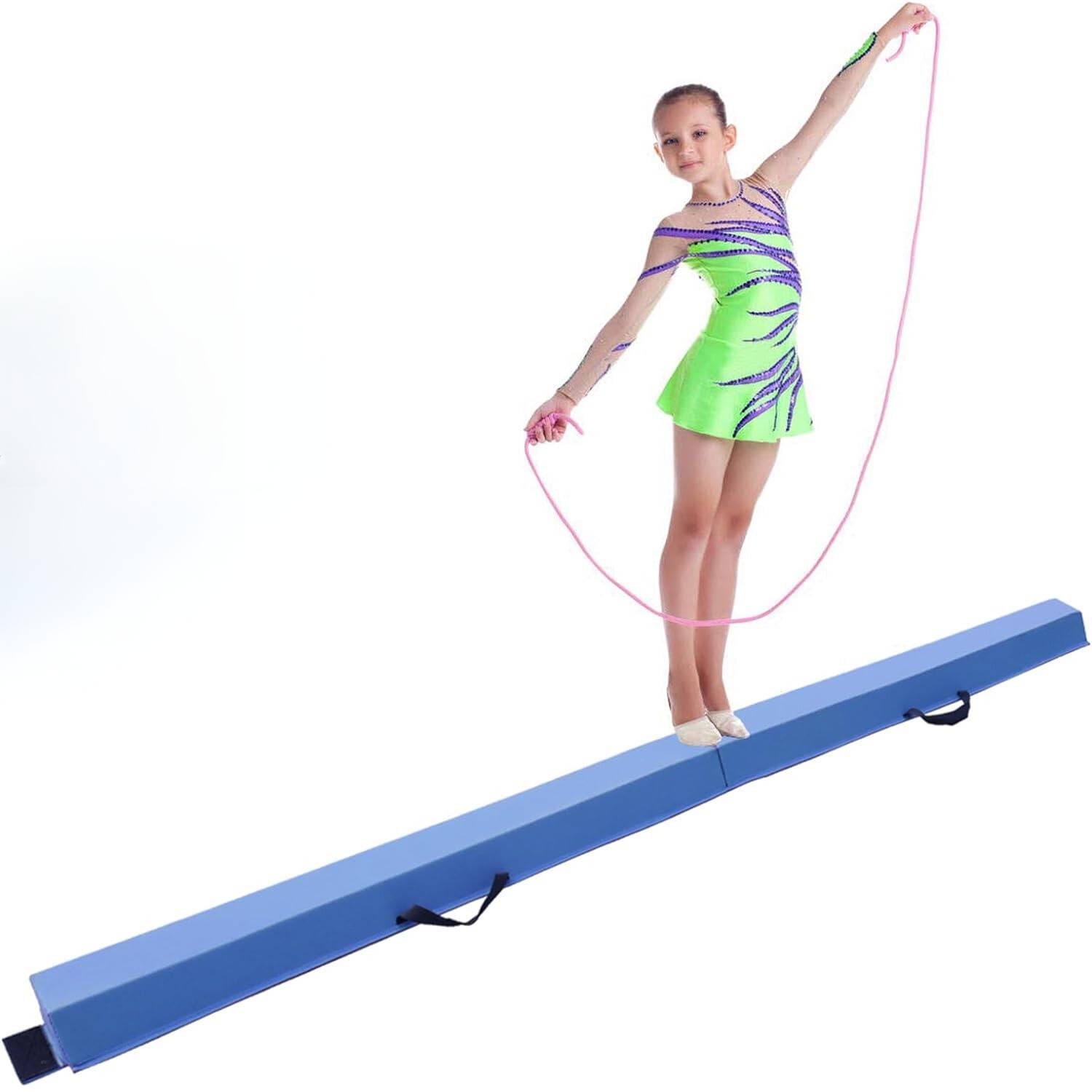
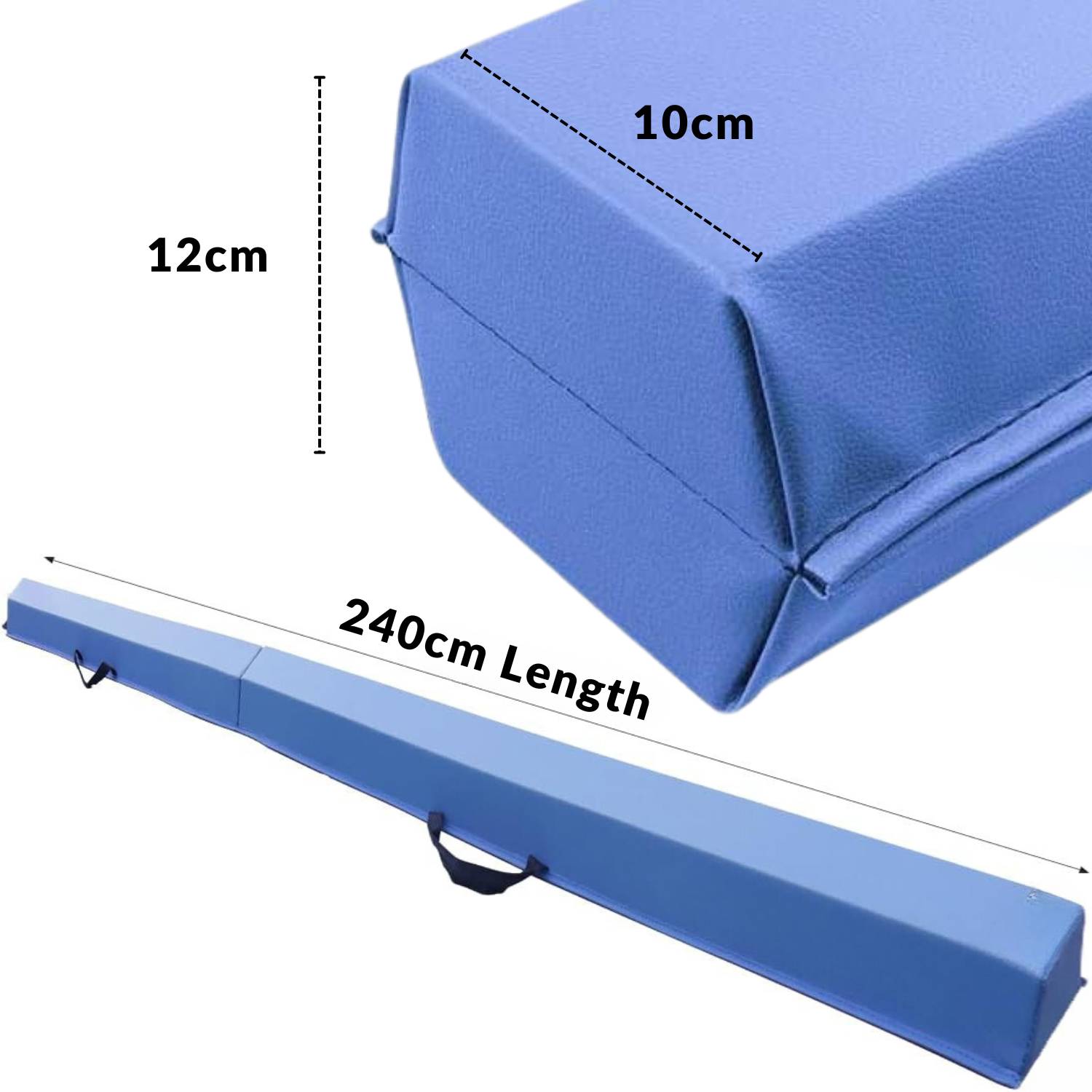
A competition beam is 10cm wide and stands 125cm off the floor.
Almost everything a gymnast learns on a beam is about the 10cm. Foot placement, line, where the eyes go, how to turn without drifting. None of that needs the height, and the height is what stops a child trying anything at all.
A floor beam keeps the exact width and removes the fear, which is why clubs use them for years before anyone goes near a raised beam.
Length changes what can be practised
Short beams are cheap and frustrating. Two steps and a turn and you are at the end.
At 240cm there is room to link movements, which is when practice starts to look like a routine instead of a drill. It is also long enough that a child can work out how to correct a drift halfway along, which is where most beam mistakes actually happen.
What to look for underneath
Two things decide whether a floor beam is any good, and both are on the bottom.
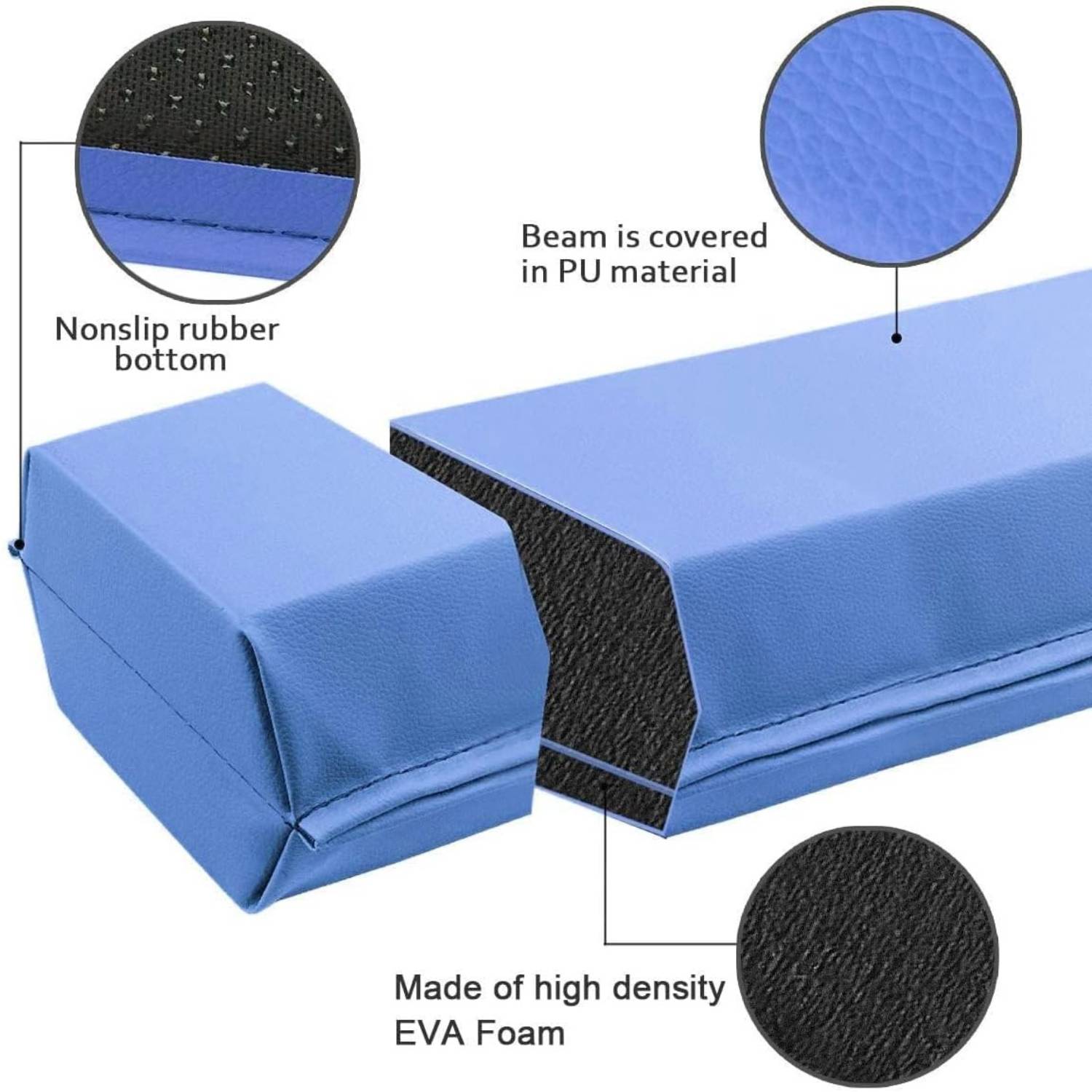
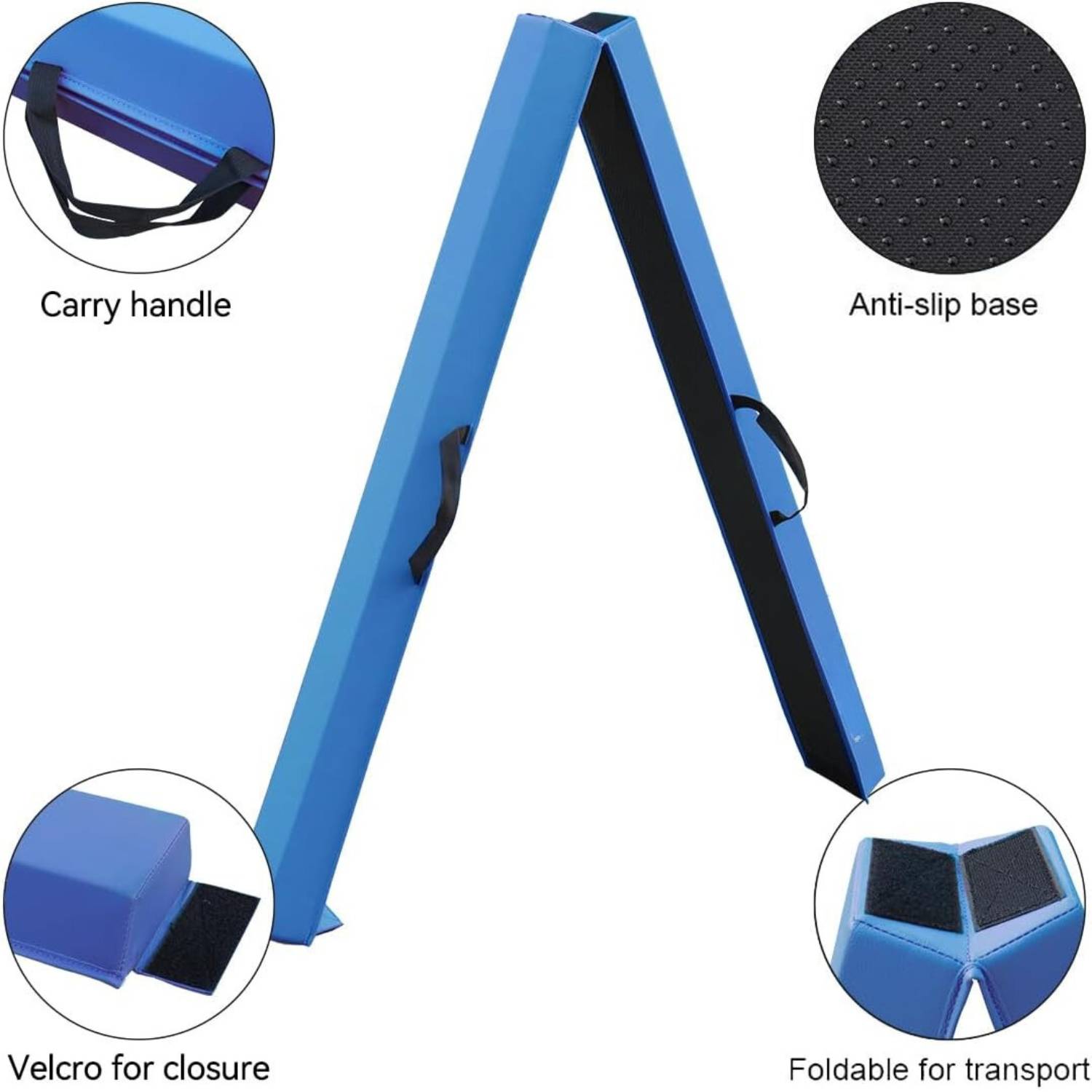
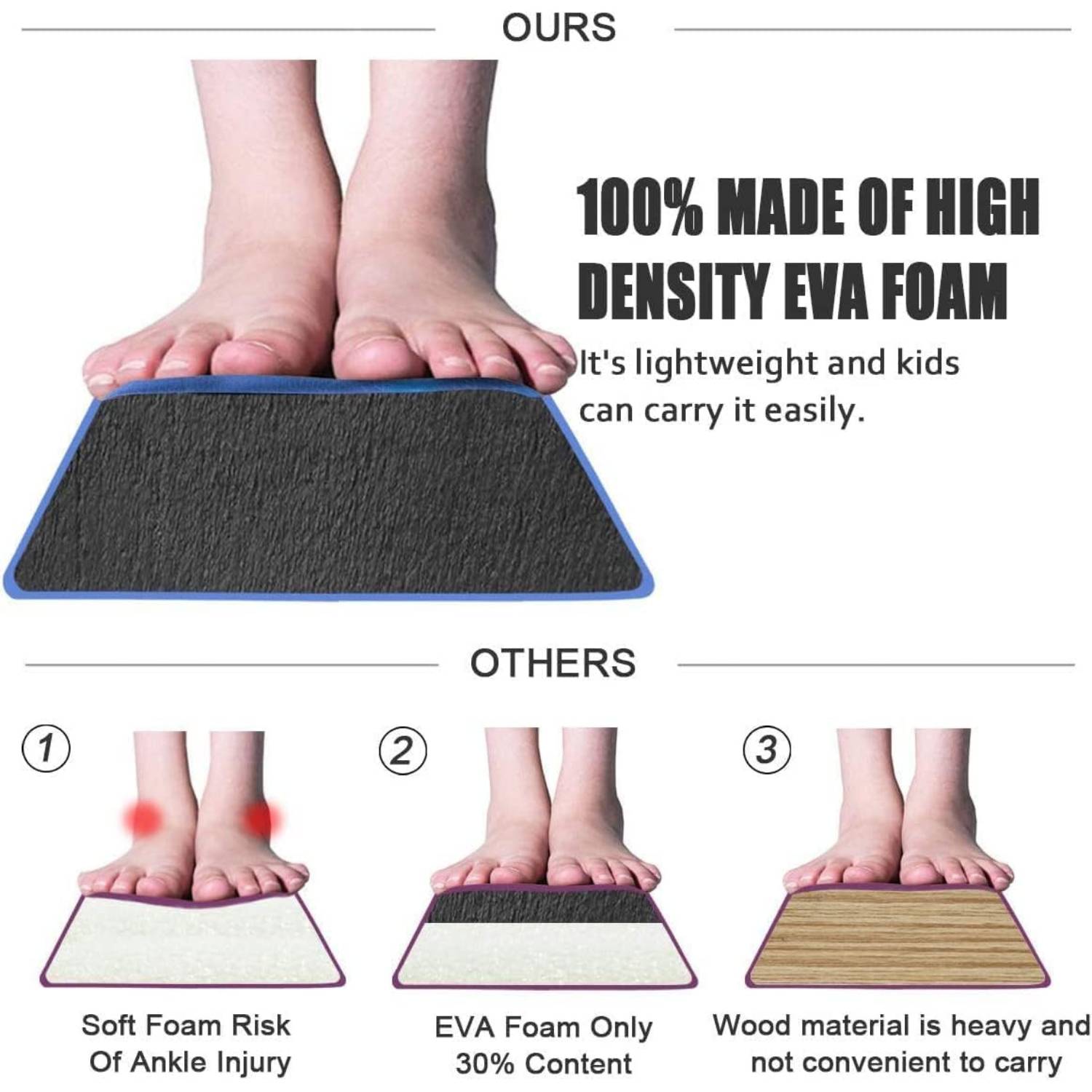
A flat base. A rounded or ridged base rocks, and rocking teaches a child to compensate for the equipment rather than to balance.
Grip. Anti slip granules on a flat base hold on wood, laminate and carpet. Any beam that travels during a turn is worse than no beam.
Supervision, honestly
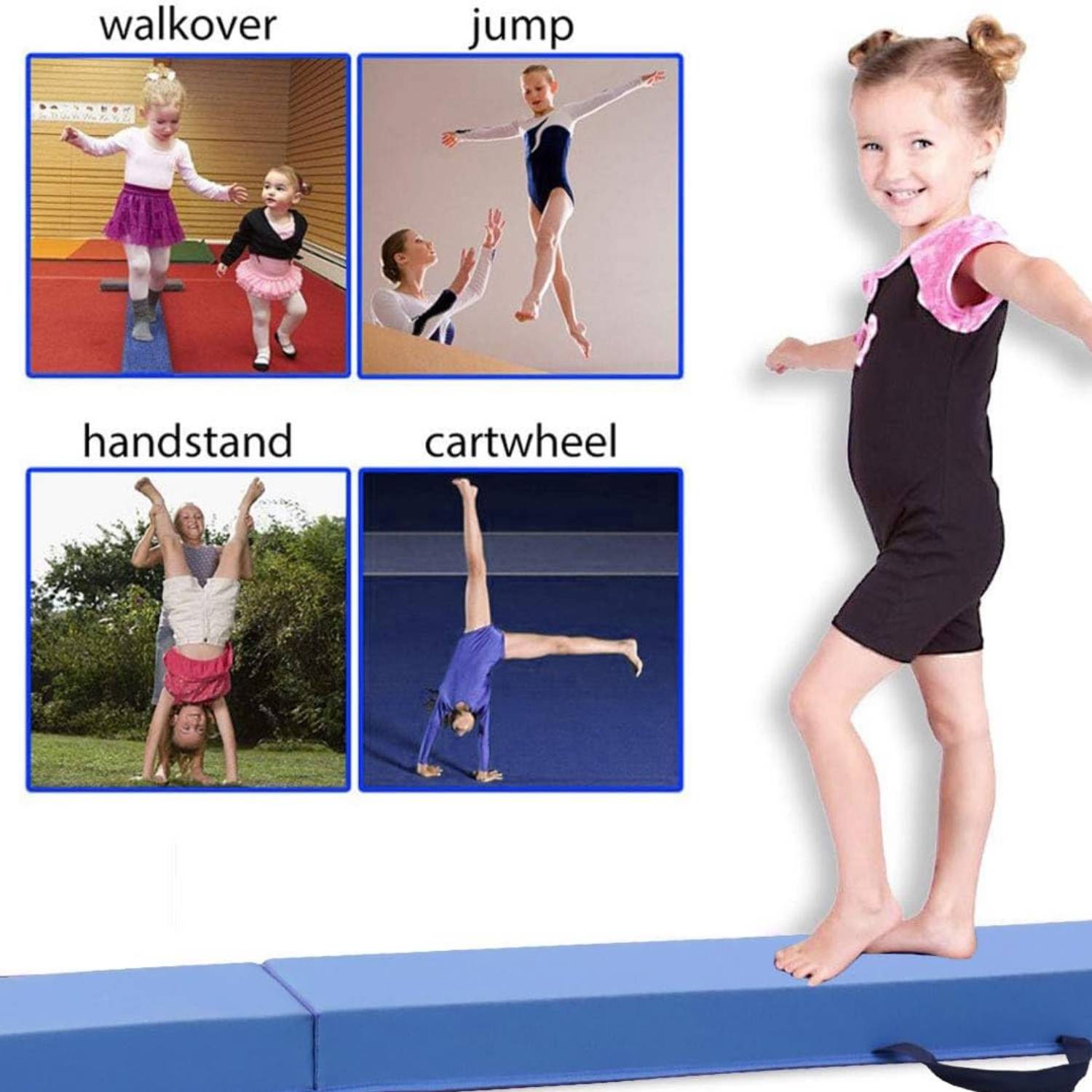
The page this replaced said children could practise walks, turns and flips safely.
The first two are fair. A flip is a coached skill, and a beam at floor level does not change that. What a floor beam genuinely gives you is a lower consequence for the mistakes that happen while learning the basics.
Storage and life
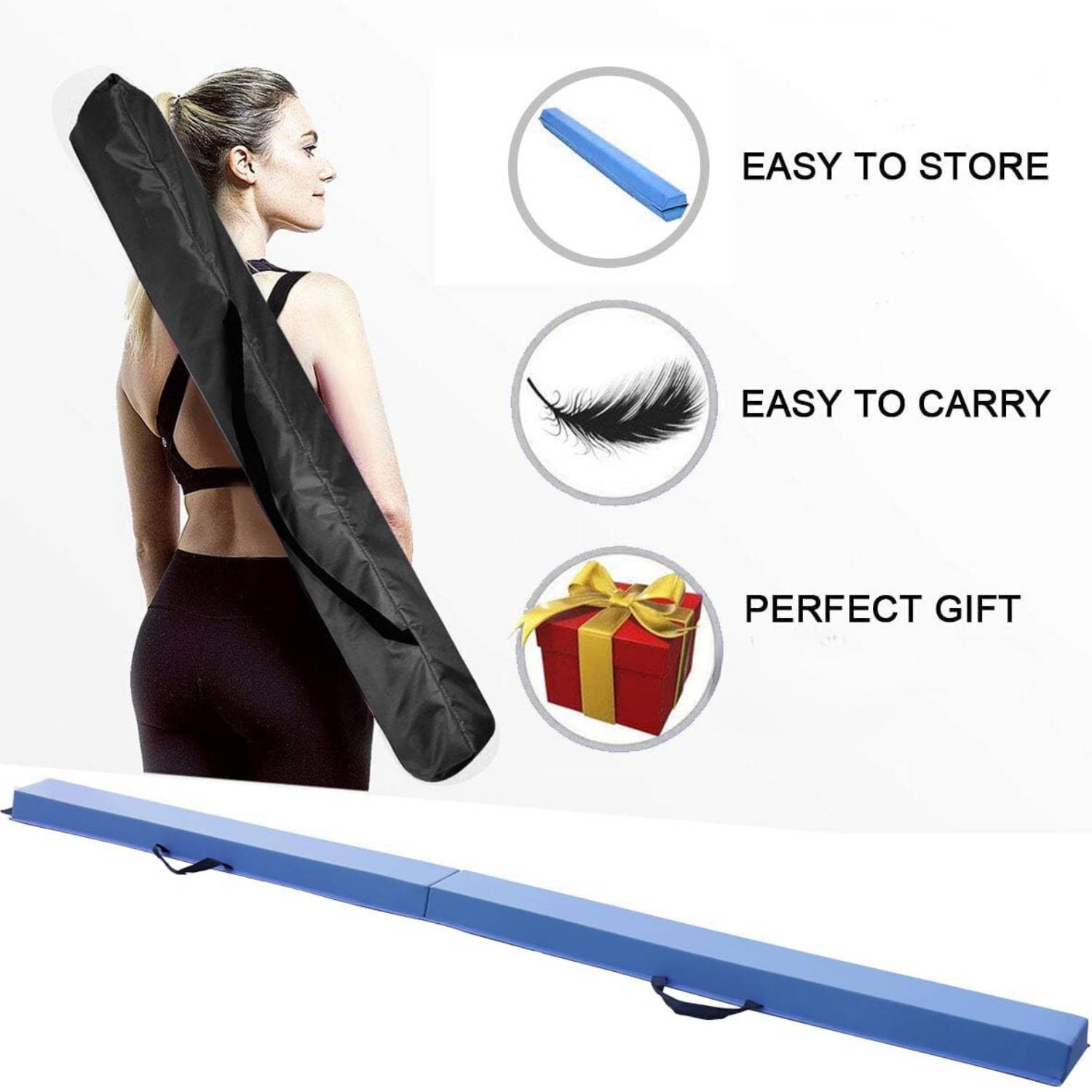
Close it with the velcro rather than creasing it. EVA remembers a sharp fold.
Keep it out of the sun. PU leather dries and cracks with heat, and a beam parked in a conservatory ages fast.
Clean the velcro occasionally. Carpet fluff is what stops it closing firmly, and a comb sorts it in a minute.