



The complete guide
Choosing a vaulting pole by index, not by feel
The one rule
The vaulter's body weight must not exceed the pole's weight index.
Everything else in pole selection is coaching. That rule is equipment safety, and it does not bend for a strong athlete, a low grip, a small runway or a good day.
What the index actually is
A weight index is the rating the manufacturer flexed the pole to. It corresponds to an athlete weight, and it exists because a pole loaded beyond its rating can fail catastrophically at the exact moment the vaulter is inverted several metres up.
Two athletes of the same weight may want different poles for reasons of technique and grip. Neither of them goes below the rating.
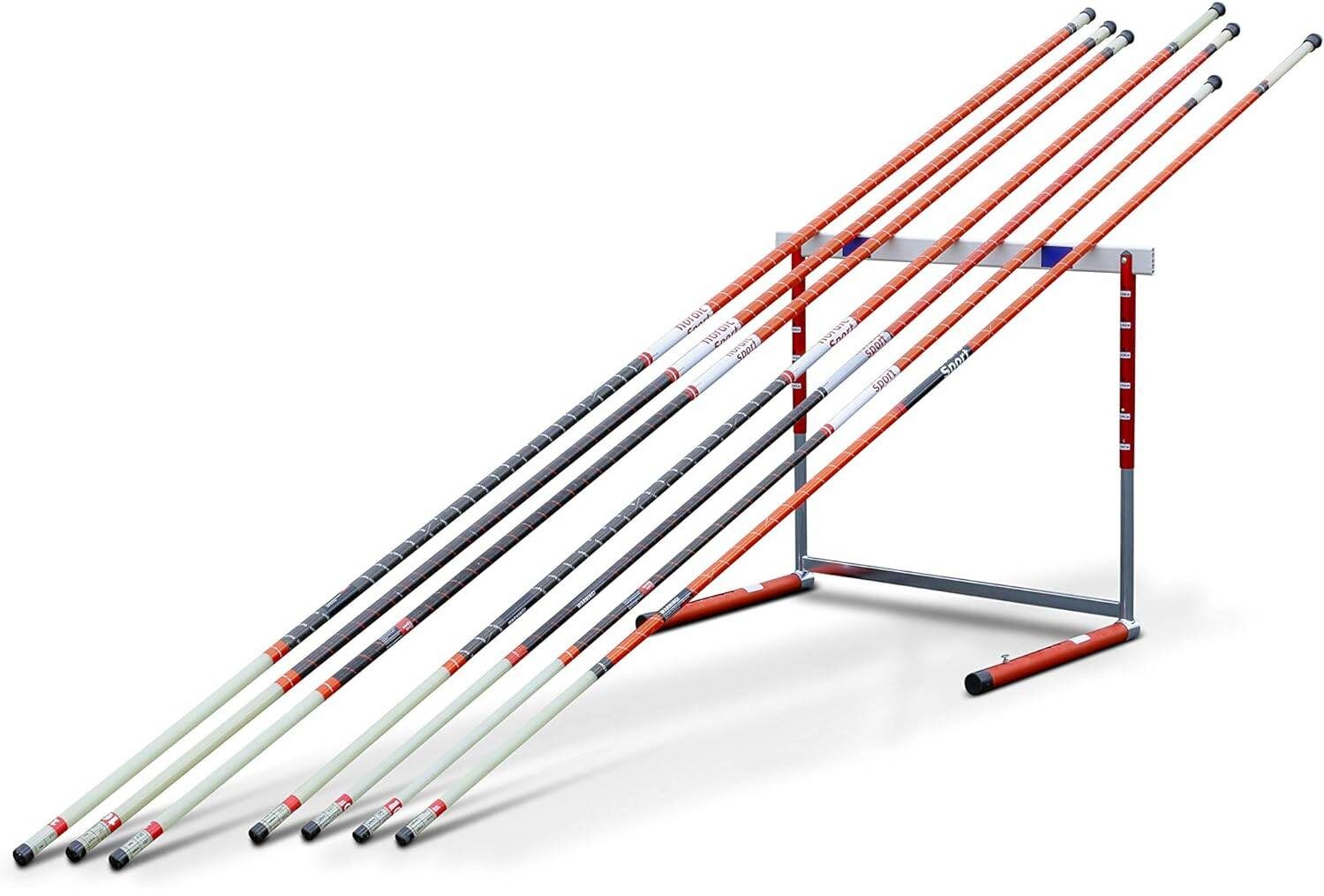
Why seven indices exist
Because vaulters grow.
A twelve year old at 35kg and the same athlete at sixteen and 60kg are different vaulters on different equipment. Clubs run a rack of poles for exactly this reason, and a school or club buying its first poles is usually buying the middle of the range and adding from there.
What has to be in place before a pole is useful
A vaulting box set correctly into the runway.
A regulation landing bed. Not mats, not a pile of anything. A bed.
A runway with a consistent surface.
A coach who is watching the vault and calling the grip height.
Pole vault is not a sport that can be self taught with equipment bought online, and this page is not going to pretend otherwise.
Inspection, every session
Whole length, both hands, good light. You are feeling for soft spots and looking for lifted fibres.
Listen when you flex it. A change in sound is a change in the pole.
Any crack, splinter, delamination or soft spot: retire it. No repair, no last session, no lower grip. Done.
Storage
Flat and supported. A pole leaned in a corner for a winter takes a set, and a pole left in direct sun ages in ways you cannot see from the outside.